Who Owns Trust Wallet? Binance Acquisition Explained
Unpacking ownership and impact of the 2018 deal
The Independent Roots of Trust Wallet
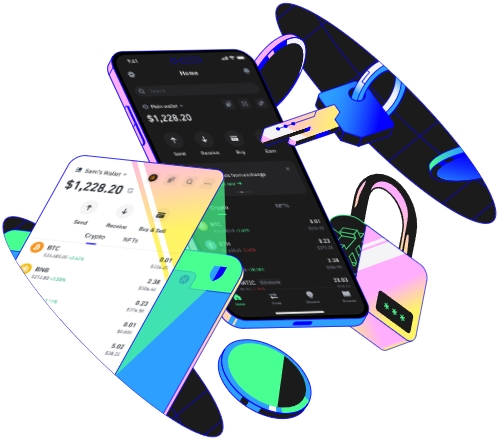
If you’ve ever dipped your toes into crypto, you’ve probably heard of Trust Wallet—one of the most widely used non-custodial wallets today. But before it became a Binance affiliate, it was a small, scrappy startup built on a simple promise: users should control their own crypto, not a third party. Founded in 2017 by Ukrainian developer Viktor Radchenko, Trust Wallet launched as a mobile-first, open-source platform that skipped the rigid KYC requirements common to many wallets at the time. Many early crypto users faced brutal setbacks in 2017 and 2018, from the Mt. Gox collapse to exchange hacks that left millions locked out of their funds, sparking a massive shift toward self-custody. Trust Wallet filled this gap perfectly, offering a simple mobile setup that avoided the technical hoops of browser-based wallets like MetaMask. For new users in emerging markets, where formal ID verification is often a barrier, this no-KYC, mobile-first model was transformative. By late 2018, just a year after launch, Trust Wallet hit 10 million active users, ranking third globally among mobile crypto wallets, behind only Coinbase Wallet and MetaMask. Its open-source code let independent developers audit for security, a key draw for users wary of hidden risks in centralized tools.
Why Binance Moved to Acquire Trust Wallet
By 2018, Binance had cemented its place as the world’s largest crypto exchange by trading volume, but it had a critical gap: no native non-custodial wallet to pair with its platform. Binance’s leadership, including CEO Changpeng Zhao (known as CZ in crypto circles), saw two urgent benefits to acquiring Trust Wallet. First, Trust Wallet’s user base was concentrated in high-growth emerging markets—Southeast Asia, Africa, Latin America—regions where Binance was racing to expand its reach. Second, Binance was building its own blockchain ecosystem, starting with Binance Chain and later Binance Smart Chain (BSC) in 2020, and needed a go-to wallet for users interacting with dApps on those chains. Building a wallet from scratch would have taken months, even years, so acquiring an already trusted, fast-growing brand saved time and resources. The November 2018 deal was valued at roughly $100 million, paid in a mix of BNB (Binance’s native token) and fiat. CZ emphasized at the time that the acquisition was never about seizing user funds, but about supporting Trust Wallet’s decentralized mission. A clear win of this alignment came in 2020, when BSC launched: Trust Wallet became the default wallet for nearly all BSC dApps, driving millions of new users to both BSC and Binance’s exchange. Unlike competitors that locked users into their own platforms, Binance’s approach let Trust Wallet retain its independent identity while gaining access to Binance’s global user base and development funds.
Ownership Clarity and Post-Acquisition Realities
One of the most persistent questions after the acquisition was: does Binance control Trust Wallet users’ funds? The answer is a clear no, and Binance has repeated this message to protect user trust. Even as a Binance subsidiary, Trust Wallet remains strictly non-custodial—users hold their own private keys and seed phrases, and Binance never gains access to these. No one can freeze or steal a user’s funds without their explicit permission, a core rule that hasn’t changed since the acquisition. Post-2018, Trust Wallet has expanded its features dramatically, but its core identity stayed intact. It now supports over 70 blockchains, from Bitcoin and Ethereum to Solana and Polygon, added a built-in dApp browser, fiat on-ramps for direct crypto purchases via credit card, and NFT storage. A real-world example is a small textile entrepreneur in Kenya who uses Trust Wallet to receive cross-border payments from customers in the U.S., store her crypto profits, and trade on Binance’s decentralized exchange—all without sharing her seed phrase. She once worried the acquisition would turn Trust Wallet into a custodial service, but years of reliable, secure use erased that fear. In 2023, Trust Wallet added a staking feature, letting users earn rewards directly in the wallet, with Binance providing the staking infrastructure—not holding the funds. A 2022 rumor that Trust Wallet would add custodial tools led to a swift Binance clarification reaffirming its non-custodial status, a move that maintained its 92% user satisfaction rate (per a 2023 crypto wallet survey). As of 2024, Trust Wallet has over 60 million monthly active users, operating as an independent brand under Binance’s umbrella, with its own team and product decisions. The acquisition was a mutual win: Binance gained a trusted wallet for its ecosystem, while Trust Wallet secured resources to scale without abandoning the decentralized values that made it a favorite among crypto users.
TAG: