Trust Wallet Cross-Chain Bridge Function Advantage Analysis
Unveiling the Benefits of Trust Wallet's Cross - Chain Connectivity
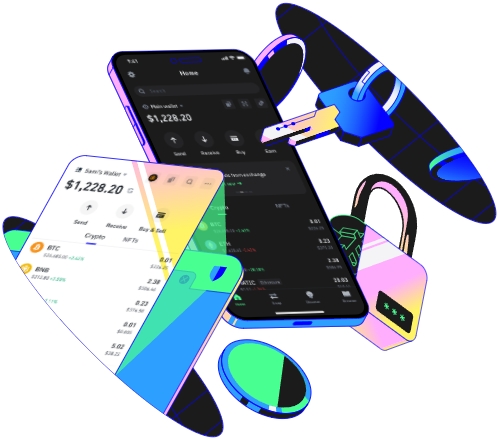
Trust Wallet, a well - known cryptocurrency wallet, has introduced a cross - chain bridge function that brings a series of remarkable advantages to the cryptocurrency ecosystem.
Enhanced Asset Mobility
One of the most significant advantages of Trust Wallet's cross - chain bridge function is the improvement of asset mobility. In the traditional cryptocurrency world, different blockchains exist as isolated islands. For example, Bitcoin is on its own blockchain, and Ethereum has its independent network. Assets on these blockchains cannot be easily transferred between each other. However, with the cross - chain bridge in Trust Wallet, users can transfer assets like tokens from one blockchain to another. Take the transfer of ERC - 20 tokens from the Ethereum blockchain to the Binance Smart Chain. Previously, such a transfer was a complex and time - consuming process, often involving multiple steps and third - party platforms. Now, with Trust Wallet's cross - chain bridge, users can simply initiate the transfer within the wallet interface. This seamless transfer of assets not only saves time but also reduces the associated risks and costs.
Moreover, enhanced asset mobility also promotes the overall liquidity of the cryptocurrency market. When assets can move freely across different blockchains, they can be more effectively allocated according to market demands. For instance, if there is a higher demand for a certain token on a particular blockchain, users can quickly move the tokens to that blockchain through the cross - chain bridge. This helps to balance the supply and demand across different blockchain ecosystems and makes the market more efficient.
Another aspect related to asset mobility is the ability to access a wider range of decentralized applications (dApps). Different blockchains have their own unique dApps. By using the cross - chain bridge in Trust Wallet, users can transfer their assets to the blockchain where the desired dApp is located. For example, a user who holds Bitcoin - based tokens can transfer them to the Solana blockchain to participate in the high - speed and low - cost dApps available on Solana. This not only expands the user's options but also encourages the development and innovation of dApps across different blockchains.
Furthermore, the cross - chain bridge function in Trust Wallet also supports the transfer of non - fungible tokens (NFTs). NFTs are unique digital assets, and they are often locked within a specific blockchain. With the cross - chain bridge, NFT collectors can transfer their NFTs from one blockchain to another. For example, an NFT created on the Polygon blockchain can be transferred to the Flow blockchain, allowing the NFT to reach a different audience and potentially increase its value.
In addition to the above, the cross - chain bridge function in Trust Wallet also provides users with more investment opportunities. Users can easily move their funds between different blockchain - based investment projects. For example, if a new and promising decentralized finance (DeFi) project emerges on the Avalanche blockchain, users can quickly transfer their assets from other blockchains to participate in this project. This flexibility in investment allows users to make the most of the various opportunities available in the cryptocurrency market.
Overall, Trust Wallet's cross - chain bridge function has revolutionized the way assets are managed and transferred in the cryptocurrency space. It breaks down the barriers between different blockchains, enhances asset mobility, promotes market liquidity, and provides users with more opportunities in the world of dApps, NFTs, and investments.
TAG: