Trust Wallet Private Key Protection Ultimate Guide
Comprehensive Guide to Safeguarding Your Keys
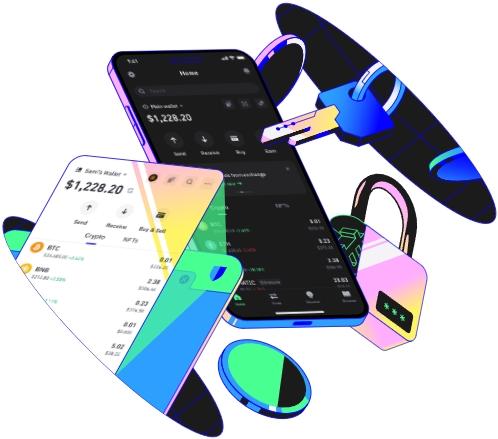
Trust Wallet is a popular cryptocurrency wallet that provides users with a convenient way to manage their digital assets. However, the security of your private keys is of utmost importance. A private key is like the key to your bank vault in the cryptocurrency world, allowing you to access and transfer your funds. Losing or having your private key stolen can result in the permanent loss of your assets.
Understand the Basics of Private Keys
Before delving into protection methods, it's crucial to understand what a private key is. A private key is a long string of alphanumeric characters. It serves as a digital signature that proves your ownership of the cryptocurrency associated with a particular wallet address. For example, if you have Bitcoin in your Trust Wallet, your private key is what gives you the authority to spend that Bitcoin.
Trust Wallet generates a private key for you when you create a wallet. This key is stored securely within the wallet, but it's essential to know how to access and protect it properly. You should never share your private key with anyone. If someone else gets hold of your private key, they can transfer your funds without your permission.
Let's take a real - life scenario. Suppose a user named John shared his private key with a so - called "crypto expert" who promised to help him manage his portfolio better. The "expert" turned out to be a scammer and transferred all of John's cryptocurrency to their own wallet. John lost everything because he didn't understand the importance of keeping his private key secret.
One way to think about private keys is to compare them to the PIN of your debit card. Just as you would never share your debit card PIN with anyone, you should never share your private key. It's the most critical piece of information for accessing your cryptocurrency.
There are different types of private keys, such as single - key and multi - key systems. In a single - key system, one private key controls all the funds. In a multi - key system, multiple private keys are required to authorize a transaction. Trust Wallet mainly uses a single - key system for simplicity, but the principle of protection remains the same.
To view your private key in Trust Wallet, you need to go through a series of security checks. This is to prevent unauthorized access to your key. Once you access it, make sure to handle it with extreme care.
Backup your private key in multiple secure locations. You can write it down on a piece of paper and store it in a fireproof and waterproof safe. You can also use a metal wallet, which is designed to store private keys securely for a long time. For example, some metal wallets have laser - engraved keys that won't fade over time.
Another important aspect is to keep your software up to date. Trust Wallet regularly releases updates that include security patches. By keeping your wallet software updated, you can protect your private key from known vulnerabilities. For instance, if a new type of malware is discovered that targets cryptocurrency wallets, the update might include measures to prevent the malware from accessing your private key.
Use strong passwords for your Trust Wallet. A strong password should be a combination of uppercase and lowercase letters, numbers, and special characters. Avoid using common words or phrases that can be easily guessed. For example, instead of using "password123", use something like "XyZ#987@Abc".
Enable two - factor authentication (2FA) on your Trust Wallet. 2FA adds an extra layer of security by requiring you to provide a second form of verification, such as a code sent to your mobile phone, in addition to your password. This makes it much more difficult for hackers to access your wallet, even if they somehow obtain your password.
Be cautious when using public Wi - Fi networks. Public Wi - Fi networks are often unsecured, and hackers can easily intercept your data. Avoid accessing your Trust Wallet or any other cryptocurrency - related accounts when connected to public Wi - Fi. If you need to access your wallet while on the go, use a virtual private network (VPN) to encrypt your connection.
Finally, educate yourself about the latest cryptocurrency security threats. The cryptocurrency world is constantly evolving, and new threats emerge regularly. By staying informed, you can take proactive measures to protect your private key and your digital assets.
TAG: