Best Network Choices for Trust Wallet Token Transfers
Choose Wisely for Smooth Token Transfers
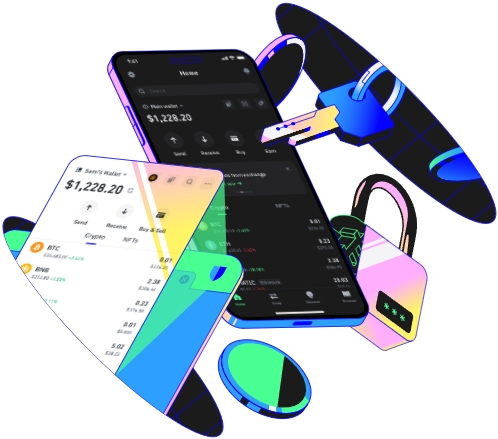
Trust Wallet has become a popular choice among cryptocurrency users due to its user - friendly interface and wide range of supported tokens. When it comes to token transfers, selecting the right network can significantly impact the speed, cost, and security of the transaction. In this article, we will explore the best network choices for Trust Wallet token transfers.
1. Ethereum Network
The Ethereum network is one of the most well - known and widely used blockchain networks for token transfers. It is the home to a vast number of ERC - 20 tokens, which are some of the most popular tokens in the cryptocurrency space. For example, tokens like Tether (USDT) in its ERC - 20 version, Chainlink (LINK), and Uniswap (UNI) are all based on the Ethereum network.
One of the main advantages of using the Ethereum network for Trust Wallet token transfers is its high level of security. Ethereum has a large and active community of developers and miners, which helps to maintain the integrity of the network. Additionally, the network has a well - established infrastructure, with many decentralized applications (dApps) and wallet integrations.
However, the Ethereum network also has some drawbacks. One of the most significant issues is high gas fees, especially during periods of high network congestion. For instance, during a major decentralized finance (DeFi) event or a large - scale token sale, the gas fees on Ethereum can skyrocket, making small - value transactions uneconomical.
2. Binance Smart Chain (BSC)
Binance Smart Chain has emerged as a strong competitor to the Ethereum network. It offers fast transaction speeds and significantly lower fees compared to Ethereum. Many tokens that were originally based on Ethereum, such as some versions of USDT and PancakeSwap (CAKE), have also launched on the BSC.
The BSC is compatible with the Ethereum Virtual Machine (EVM), which means that developers can easily port their Ethereum - based dApps to the BSC. This has led to a rapid growth of the BSC ecosystem, with a large number of DeFi projects, NFT marketplaces, and other applications being developed on the network.
An example of the benefits of using BSC for Trust Wallet token transfers can be seen in the case of a small - scale investor. Suppose an investor wants to make multiple small - value token trades. On the Ethereum network, the high gas fees would eat into their profits. But on the BSC, the low fees allow for more cost - effective trading.
3. Solana Network
The Solana network is known for its extremely high - speed transaction processing and low fees. It can handle thousands of transactions per second, which is far more than what Ethereum or BSC can achieve. Tokens like Serum (SRM) are native to the Solana network.
Solana's performance makes it an excellent choice for high - frequency traders and those looking for instant token transfers. For example, in a fast - paced NFT marketplace, where quick transactions are crucial to secure a desirable NFT, the Solana network can provide a seamless experience.
However, the Solana network has faced some challenges in terms of network outages in the past. These outages can disrupt token transfers and cause inconvenience to users. Despite this, the development team is constantly working to improve the network's reliability.
4. Polygon Network
Polygon, formerly known as Matic Network, is a Layer 2 scaling solution for the Ethereum network. It aims to solve the scalability issues of Ethereum by providing faster and cheaper transactions while still maintaining the security of the Ethereum mainnet. Tokens like Aavegotchi (GHST) can be transferred on the Polygon network.
Using the Polygon network for Trust Wallet token transfers is beneficial for users who want to avoid the high Ethereum gas fees. For example, a user who wants to participate in a DeFi yield farming project on an Ethereum - based dApp can use the Polygon network to reduce the cost of each transaction. The Polygon network also has a growing ecosystem of its own, with various dApps and services being developed.
When choosing a network for Trust Wallet token transfers, users need to consider factors such as the type of token they are transferring, the transaction speed they require, the cost of the transaction, and the security of the network. By carefully evaluating these factors, users can make the best network choice for their specific needs.
TAG: